
Assessing Surface Vehicle Traffic Vibrations in Lima, Peru
How vibrations from surface vehicle traffic impact the underlying structure of an underground metro construction project.
Background
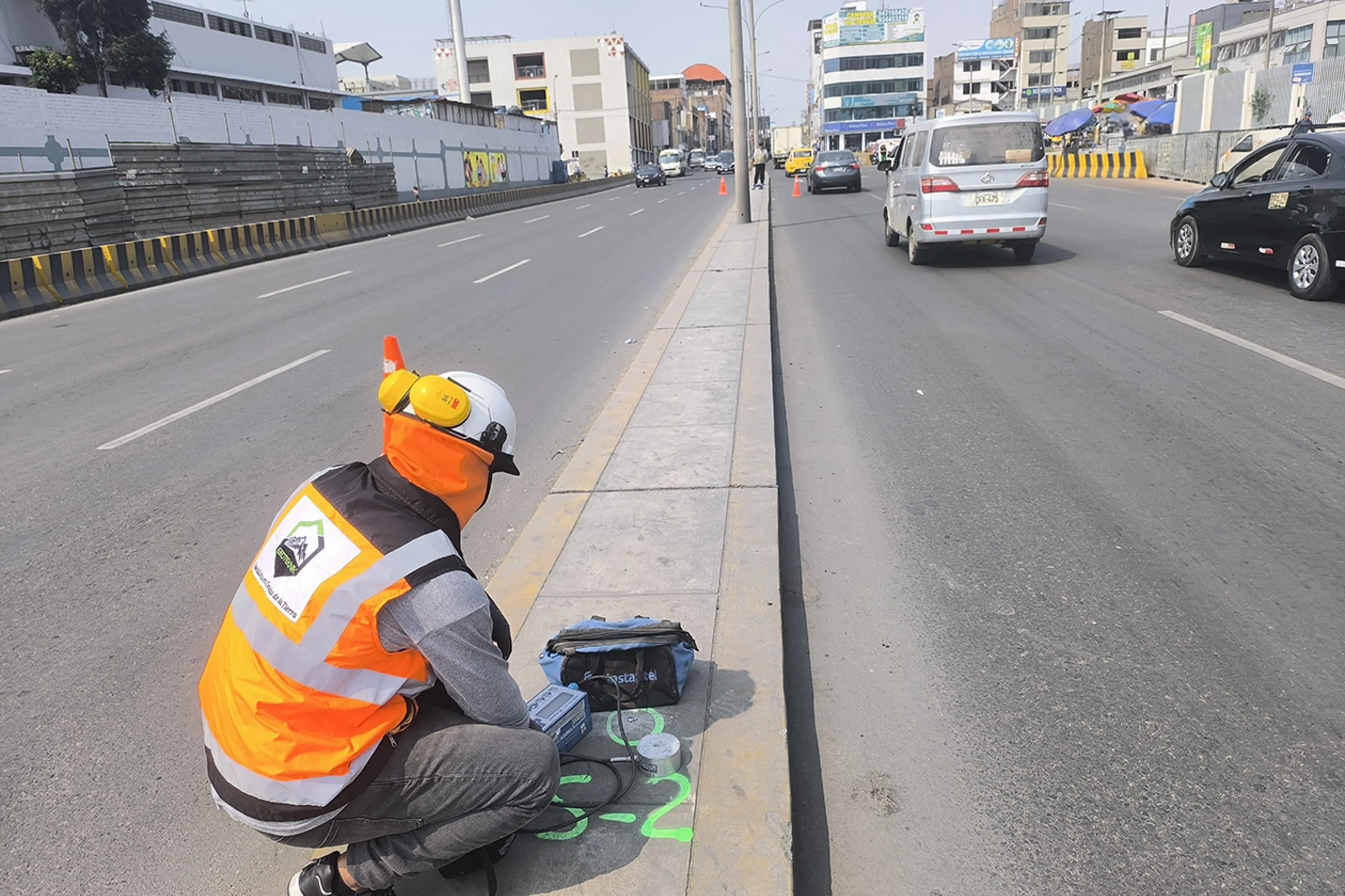
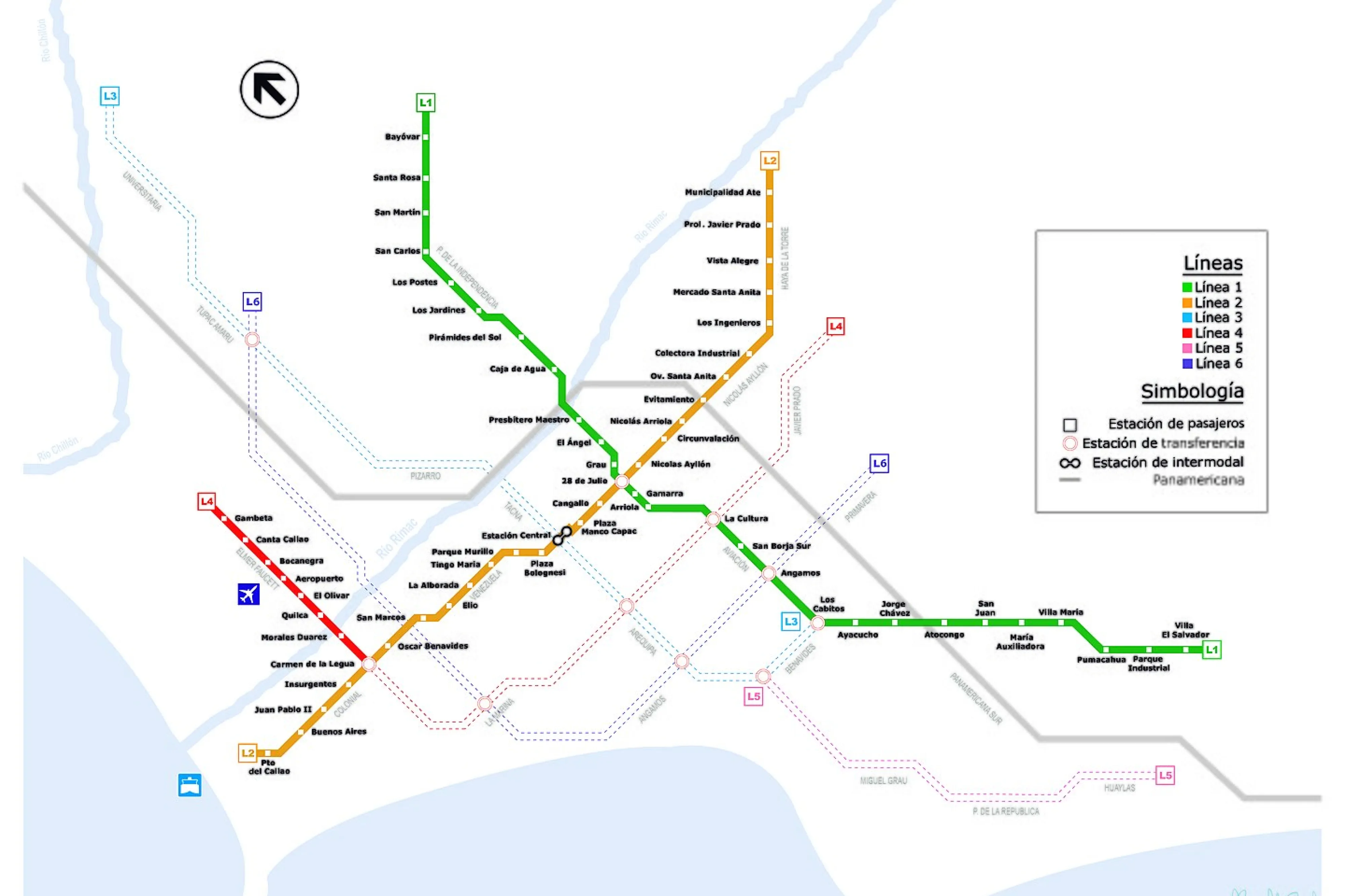
As part of the underground metro construction project in Lima, Peru (Stations E-26 and E-27, Line 2), Geoteknik conducted a vibration monitoring study with Instantel equipment to assess how vibrations from surface vehicle traffic impact the underlying infrastructure at the Javio Prado Extension (Station E-26) and at the intersection of Nicolás Ayllón and Perú avenues (Station E-27). Both stations lie directly beneath major high-traffic junctions; the study was designed to capture representative dynamic load conditions and verify whether their impact remained within the limits set by the international standard DIN 4150-3.
Challenge
The purpose of these two studies is to determine the peak particle velocity (PPV) levels generated by surface traffic and evaluate their impact on the underground structures, especially in the station's concourse. Vibrations are verified against the DIN 4150-3 standard, Category III (sensitive structures), to validate the station's structural resilience and operational safety under existing traffic conditions.
Approach
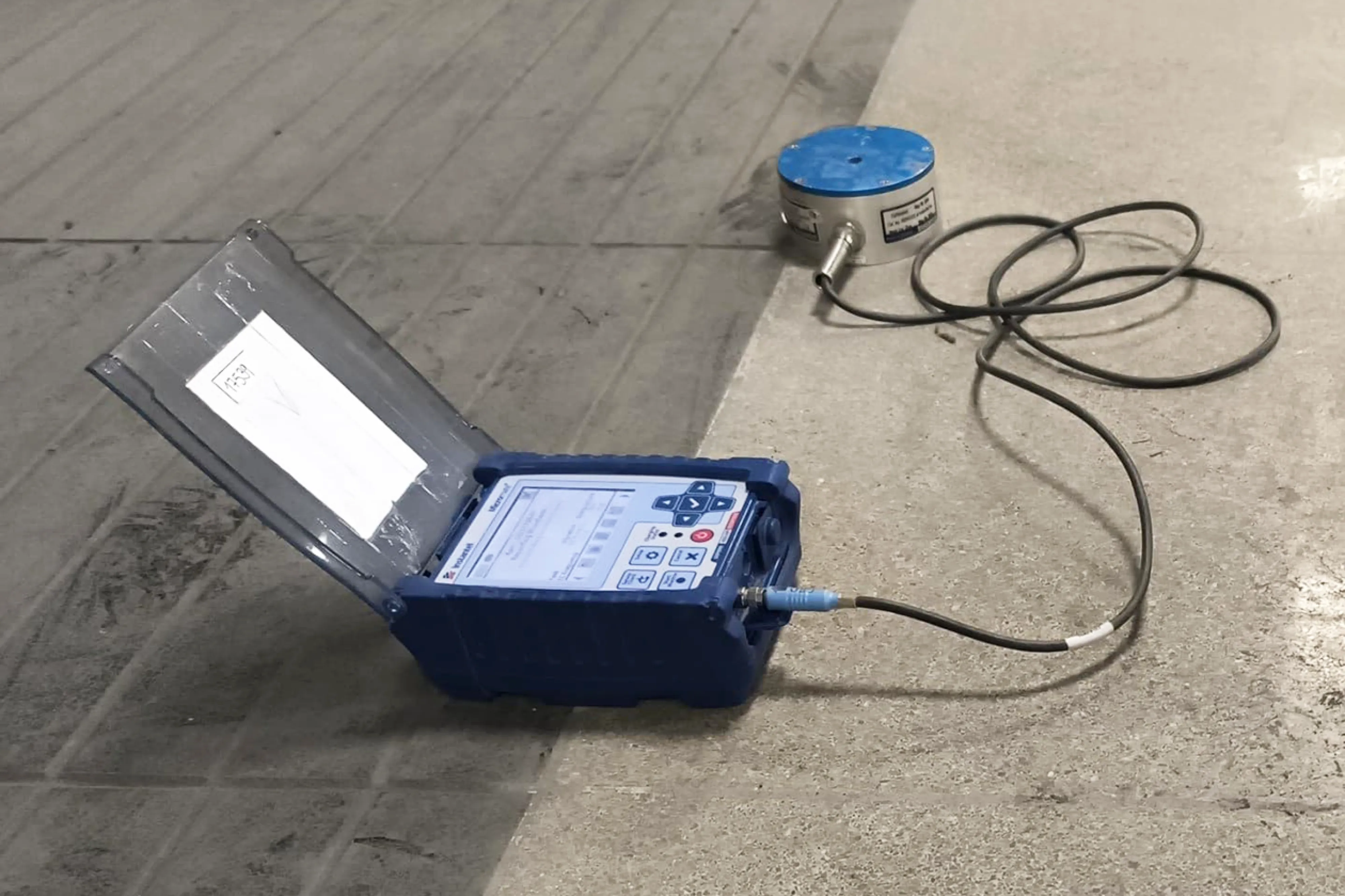
Utilizing a combination of Micromate and Minimate Pro units and DIN triaxial geophones, monitoring campaigns were carried out during two representative time periods. Sensors were installed on the street surface and inside the structure. Each unit was configured to capture data along three axes (vertical, longitudinal, and transverse) and pointed in the same direction as the traffic flow.
Results
Vibration monitoring at both sites confirmed that traffic-induced dynamic loads comply with DIN 4150-3 Category III limits for sensitive structures. During both monitoring periods, peak particle velocity (PPV) values in all orthogonal components and the vector sum remained below the 3 mm/s threshold—reduced PPV levels observed during the later time window correlated with lower traffic intensity. Vector sum and dominant frequency analyses showed that measured vibrations were outside the station’s structural natural frequency range, indicating a low risk of resonance, fatigue, or cumulative structural effects. Data from surface and concourse sensors confirmed structural integrity and operational safety under existing traffic conditions.
Conclusion
All records remained within the critical threshold of 3 mm/s defined by DIN 4150-3 (Category III). While slight variations were observed between the two monitoring periods, these were consistent with decreased vehicular activity. Measurements taken both at the surface and in the concourse confirmed safe operating conditions against external dynamic loads, and the validated data support the station's vibrational stability under the current traffic scenario, without risk to sensitive structures.