Dynamic Compaction
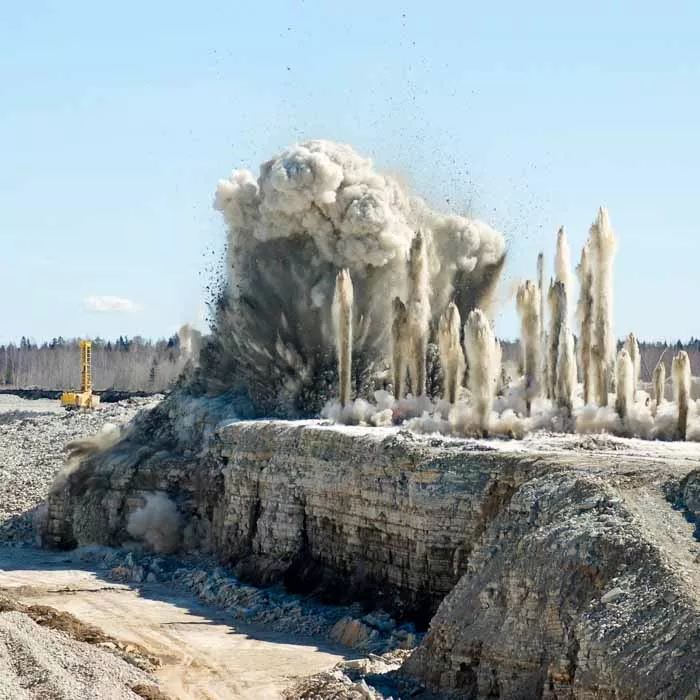
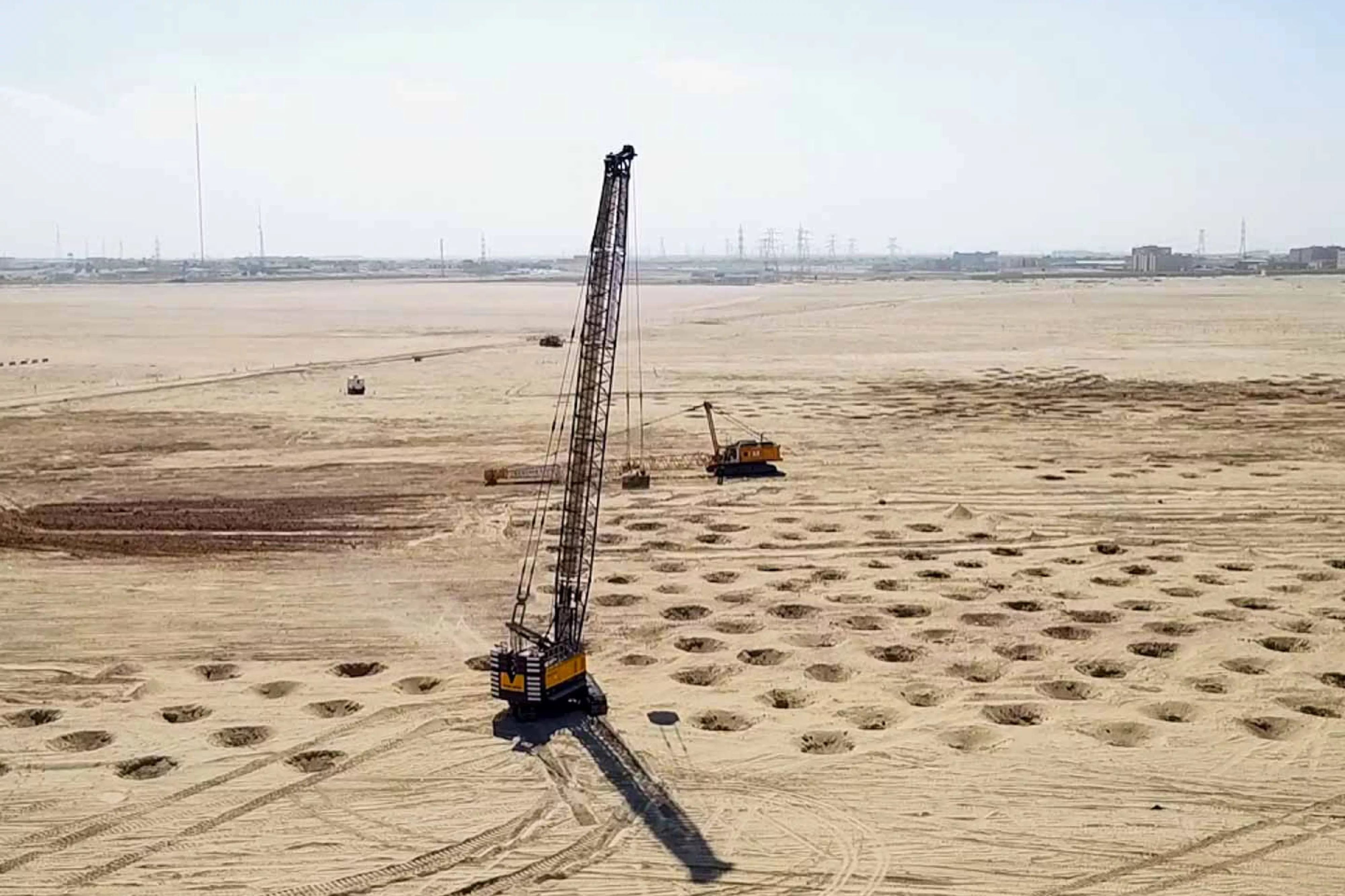
Dynamic compaction drops a heavy weight on the ground to increase the density of the underlying soil. This process can create strong ground vibrations and noise.

Why Monitor During Dynamic Compaction?
Dynamic compaction is used to increase the density of the soil and improve its engineering properties. The process involves dropping a heavy weight repeatedly on the ground at regularly spaced intervals in a planned grid pattern, typically using a crane to lift and release the mass. The energy generated by the repeated impacts rearranges soil particles, reduces voids, increases shear strength, and decreases settlement potential. This technique is commonly used to prepare the ground before construction, particularly for large-scale projects such as industrial developments, ports, and transportation infrastructure. The process mitigates liquefaction, reduces long-term settlement, and renders the ground more stable and suitable for bearing the loads of buildings and other structures.
How Instantel Can Help
Using monitoring equipment from Instantel, vibration, air overpressure, and/or noise levels can be recorded and monitored simultaneously, as they occur during the compaction process. Since recorded data can be viewed almost immediately, project teams can make informed adjustments in real time — before regulatory limits are exceeded or before community concerns arise. Pre-configured warning and alarm thresholds can be established based on project-specific requirements, regulatory limits, or site conditions. These trigger levels can vary from one job to another and are customizable by sensor. When thresholds are approached or exceeded, automated notifications can be sent to designated recipients — whether that includes site personnel, project managers, consultants, or regulatory authorities. Events, devices, and project management can be accessed on computers, laptops, tablets, or smartphones, ensuring visibility wherever you are. In addition, a secure historical record of monitoring data is maintained in the cloud for 24/7 access. This documented evidence can be invaluable in addressing complaints, demonstrating compliance, and protecting against future claims or liability.
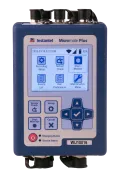
The Instantel monitoring system pairs the Micromate Plus unit with a versatile range of sensors to capture vibration, noise, and air overpressure simultaneously with real-time data reporting powered by Vision II software.
| 
| 
| 
|
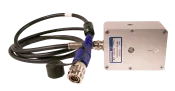
Micromate Plus | Triaxial Geophone | Linear Microphone | Sound Level Microphone |
Robust, reliable monitoring unit with built-in features, including Wi-Fi and cellular modem, GPS, battery, and solar charge controller. | One geophone measures to ISEE standards (2 - 250 Hz) and DIN standards (1 - 315 Hz and 1 - 80 Hz). | Measures air overpressure on a linear scale from 2 Hz to 250 Hz with a range up to 1000 Pa (0.145 psi or 154 dB). Calibrated to the ISEE-2022 standard. | Class 1 sound/noise microphone. Measures sound/noise levels in decibels and audio clips. Up to 20 kHz with a range of 30 to 140 dB. Calibrated to the ISEE 61672-1 standard. |
| Learn more about the Micromate Plus | |||
Connecting with Instantel Software Systems
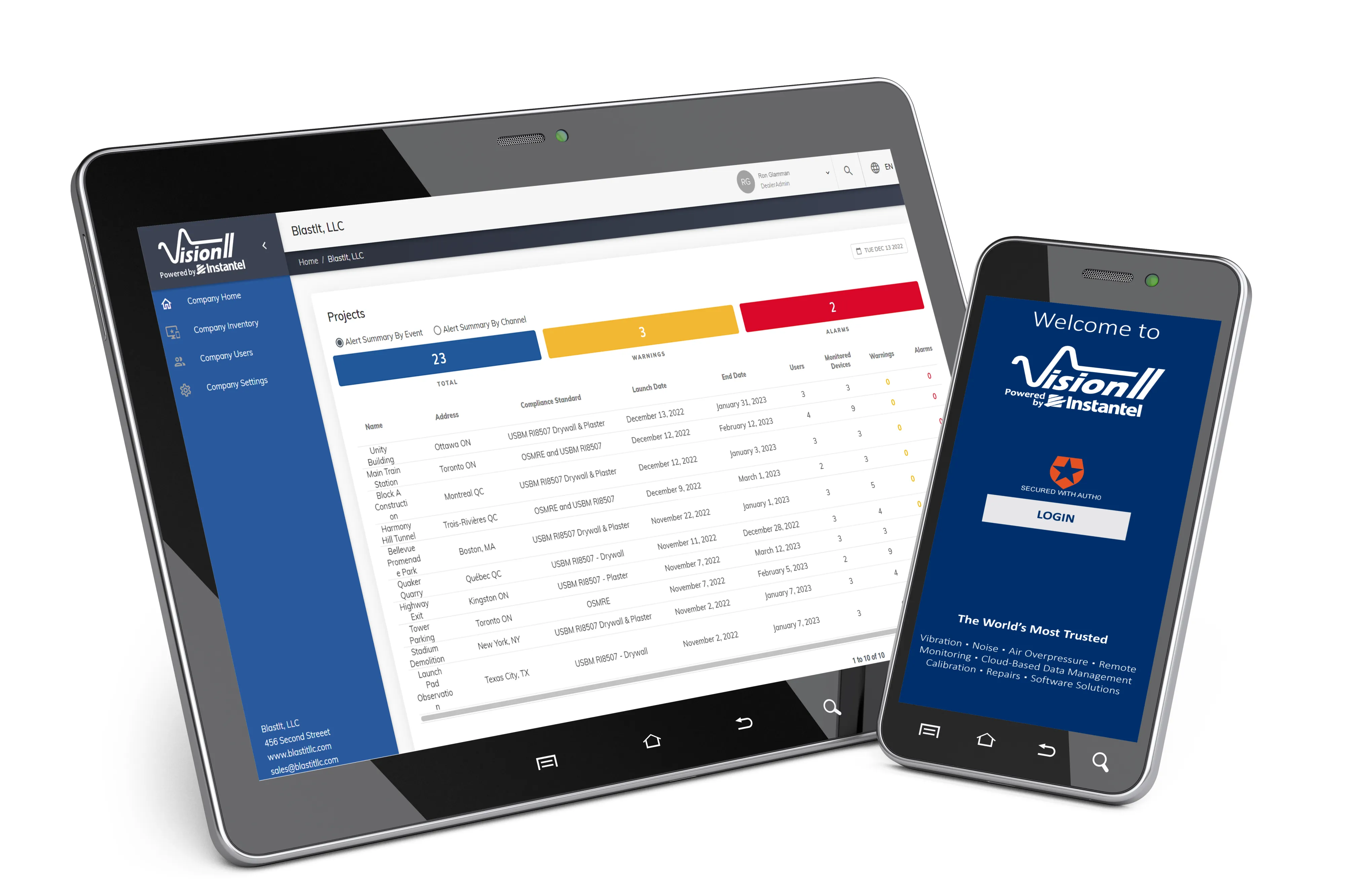
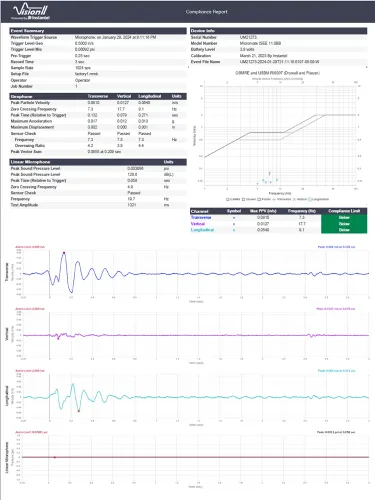
The Micromate Plus system integrates a vibration monitoring unit with a triaxial geophone, sound level, and linear microphone to simultaneously measure ground vibration levels, noise, and air overpressure, providing a complete picture of generated impacts. Devices can be configured to continuously record in Histogram-Combo mode, capturing background vibration levels while still generating detailed waveform reports for events that exceed defined trigger thresholds. The histogram event reports deliver peak particle velocity (PPV) values at set intervals, ensuring comprehensive vibration profiling throughout the monitoring period, which is ideal when monitoring activities with repetitive vibrations such as dynamic compaction.
Combined with Vision II, reports can be automatically scheduled for delivery at a specified time or at the end of each day. The Live Data feature in Vision II provides real-time reporting, enabling proactive adjustments during dynamic compaction activities as they occur. With 24/7/365 access to event data and customizable viewing preferences, users can keep project managers informed of monitoring activity or provide clear, compliant reports with easy-to-understand SnapShot views to relevant stakeholders.
We manufacture and calibrate each Micromate Plus monitoring system to rigorous standards, ensuring maximum reliability and data integrity—even in the most extreme conditions.